Market-entry research
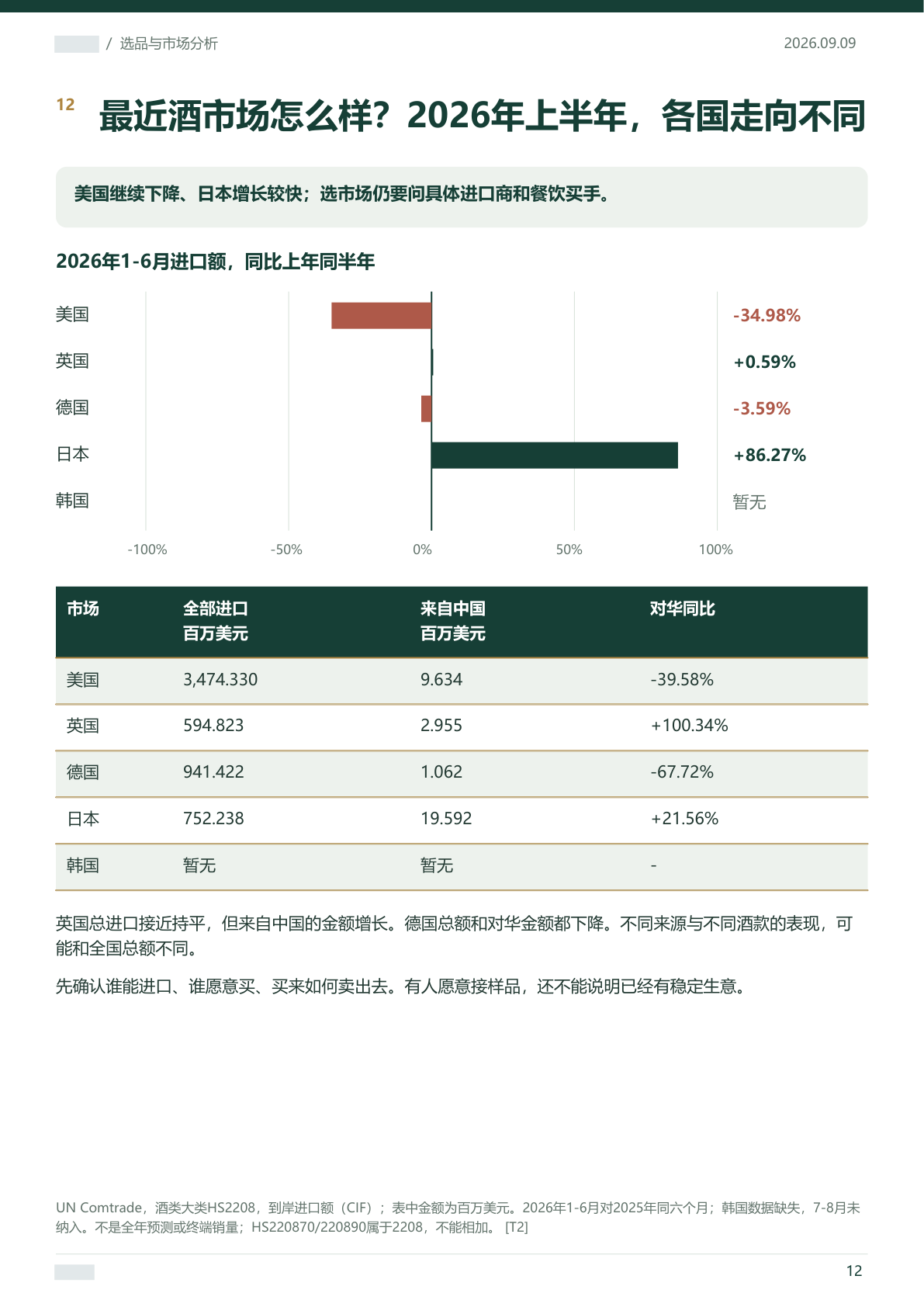
Compare import trends and data definitions to choose markets worth testing.
AI APPROACH / ORIGINAL CREATIVE & DETAILED REVIEW
Understand the product. Create a clear story. Improve it with evidence.
Start with the product, audience and goal.
Turn product value into content people want to watch.
See what earns attention and engagement.
Put resources behind content that has shown promise.
Use AI-assisted analysis to refine the next round.
Create good content, test it, then promote what works. Choose any step for the details.
Start with the problem customers want to solve, the situation they face and the next step the content should help them take. Original creative thinking turns the process and product’s role into stories, visuals and explanations people want to watch. AI assists detailed review; the team judges what remains unclear and how to improve organic reach and paid-media efficiency.
Ask what customers want to improve and what holds up their choice. Confirm where the product fits, its capabilities and the evidence, then define the questions to answer and the delivery scope.

Working outputConfirmed project brief · Questions to resolve
As in a series people choose to follow, characters face a problem and take action: the product’s role becomes clear through the process and outcome. The same creative approach works in brand films, educational content, demonstrations and social graphics.
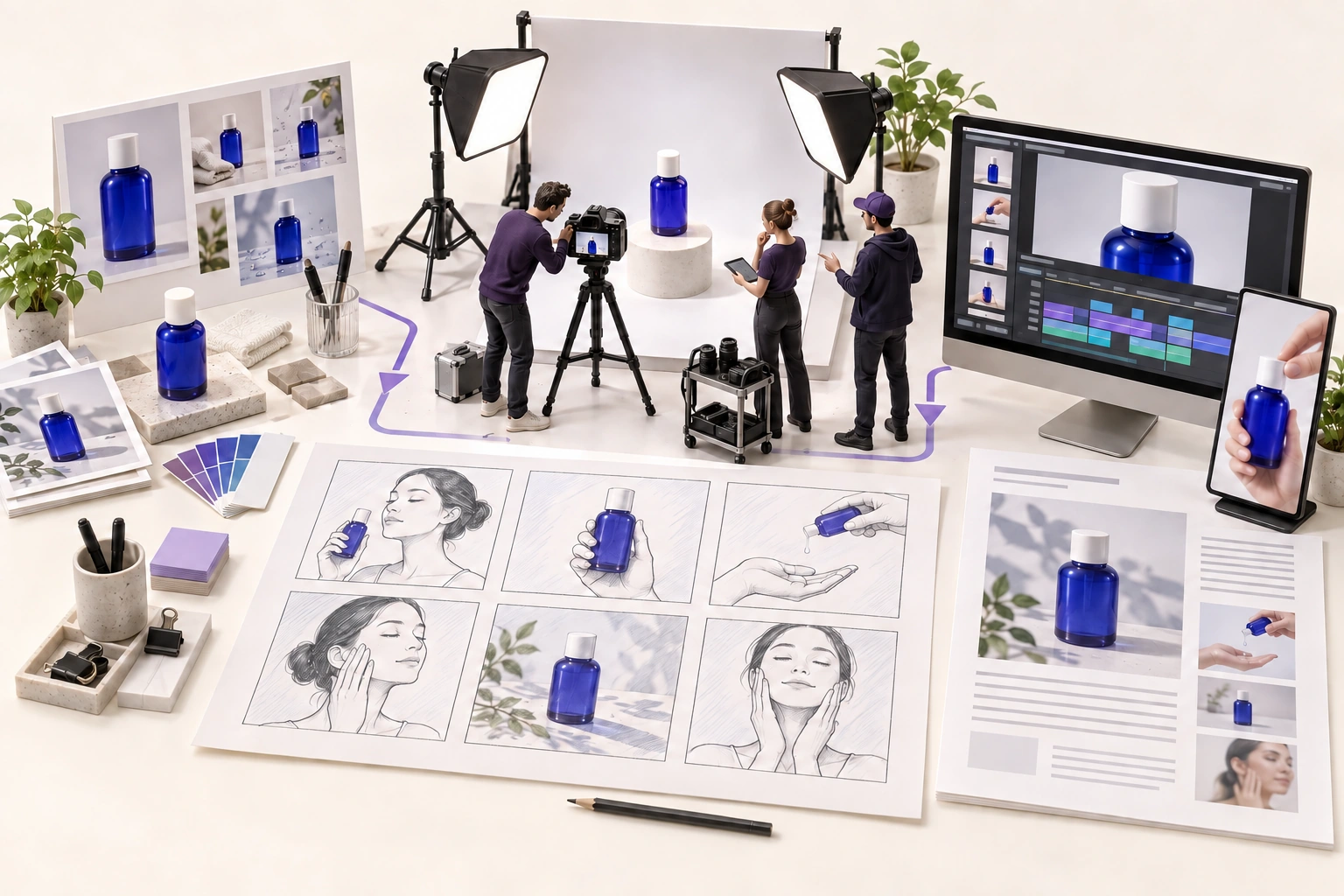
Open with the outcome customers want. Use stories and demonstrations to show how the product, production line or team helps. Explain where it fits and the differences easy to overlook, with evidence and a clear next step.
Use attention, completion, sharing and enquiries to assess engagement and clarity. Strong content earns organic reach and makes paid traffic more effective, helping substantially reduce media spend.
Working outputOriginal creative direction · Scripts and storyboards · Visual expression · Final review
Agree on criteria for the same business goal. Check whether the product’s role is clear, then compare attention, completion, engagement and enquiries across versions. Account for audience, channel, timeframe and budget before scaling based on high views alone.
Plan a controlled expansion.
Continue to scaleRevise the message or format, then retest.
Return to creationAdd relevant observations before deciding.
Keep testingWorking outputValidation plan · Version comparison · Next-step decision
Phase spending around audiences and creative with supporting evidence, coordinating paid media, creators and publishers. Confirm asset rights, publishing schedules and feedback, then use organic and paid performance to guide the next round.
Phase the audience, budget and assets.
Adapt the expression; agree on rights and timing.
Confirm the content and channels before release.
Working outputApproved versions · Resource plan · Delivery schedule
Use authorized feedback to find where attention drops, then improve the next version.
The team uses audience feedback and AI-assisted review to refine the next version.
Organise video performance, comments and client feedback.
Review the opening and transitions alongside the feedback.
Inspect the opening 0–3 secondsRefine the hook, structure and visual expression.
Compare the revised content, then review again.
Working outputDaily performance review · Detailed analysis · Content and publishing improvements · Updated project knowledge
Review the previous day’s performance every day. AI helps organize authorized platform data and client feedback, comparing impressions, clicks, watch time, completion, engagement and conversions by audience, creative and channel. The team investigates differences and drop-off points, then applies the findings to today’s content and publishing.
REAL DELIVERABLES / METHOD IN PRACTICE
See how a plan reaches a decision and how a script guides production. Use the redacted report excerpts and original project records to judge whether the method fits your challenge.
Compare import trends and data definitions to choose markets worth testing.

Turn a wordplay idea into a 00–14-second storyboard with actions, dialogue and sound.
Updated 16 Sep 2026
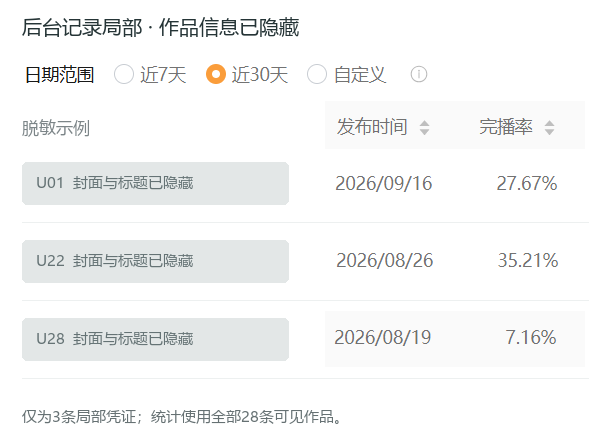
The last-30-days screenshots show 28 distinct works published from 19 Aug to 16 Sep 2026: 34 visible rows across six screenshots, less six overlaps. The mean weights each work equally; it is not a view-weighted account-wide rate.
The zero-follower first-month context was provided by the project owner; screenshots verify the displayed dates and work-level metrics only. Data supplied on 16 Sep 2026.